
AWS·Generative AI Platform UX·2024
Amazon Bedrock
Designing scalable workflows and reducing ambiguity for GenAI applications.
Designing scalable workflows and reducing ambiguity for GenAI applications.
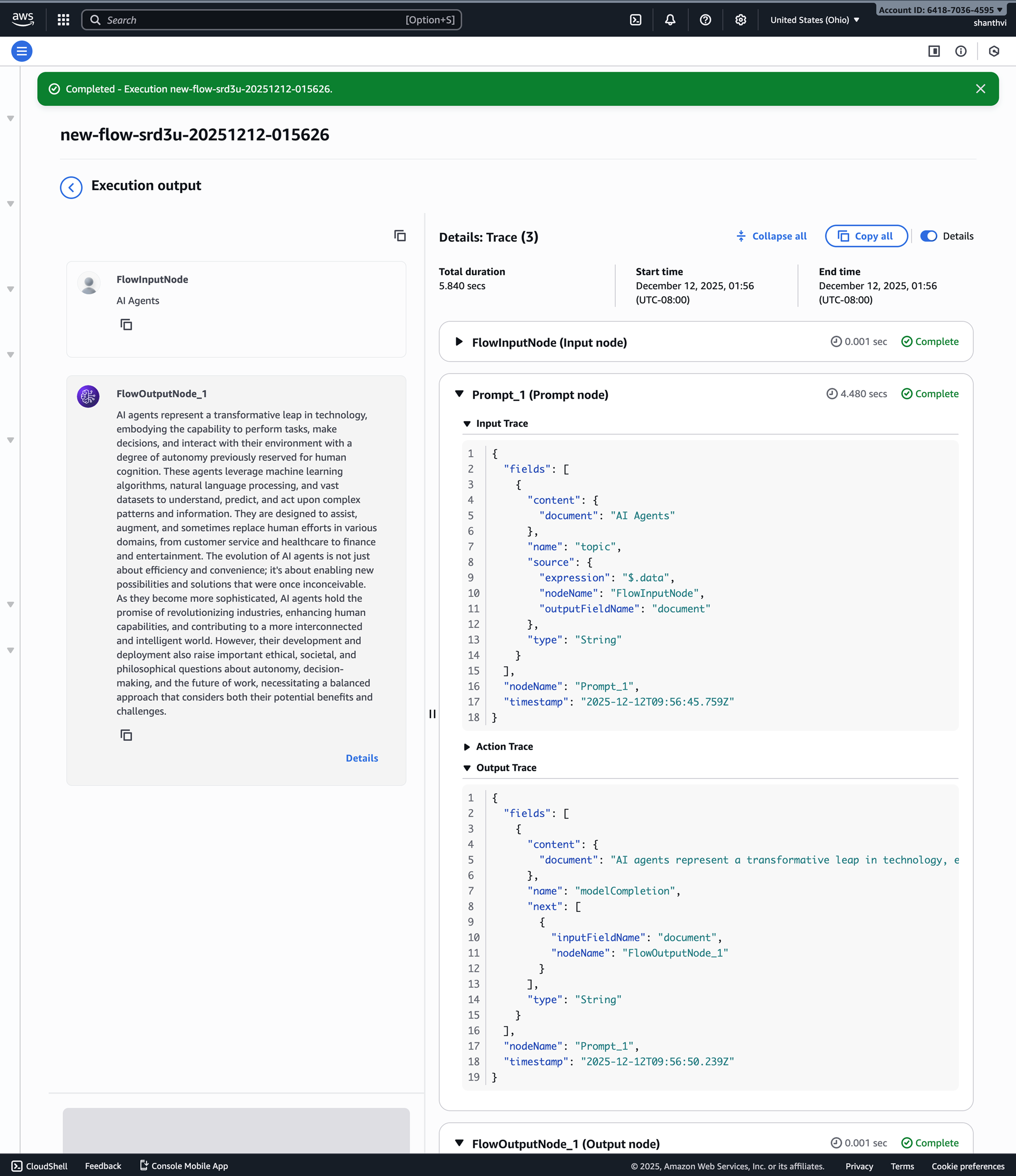
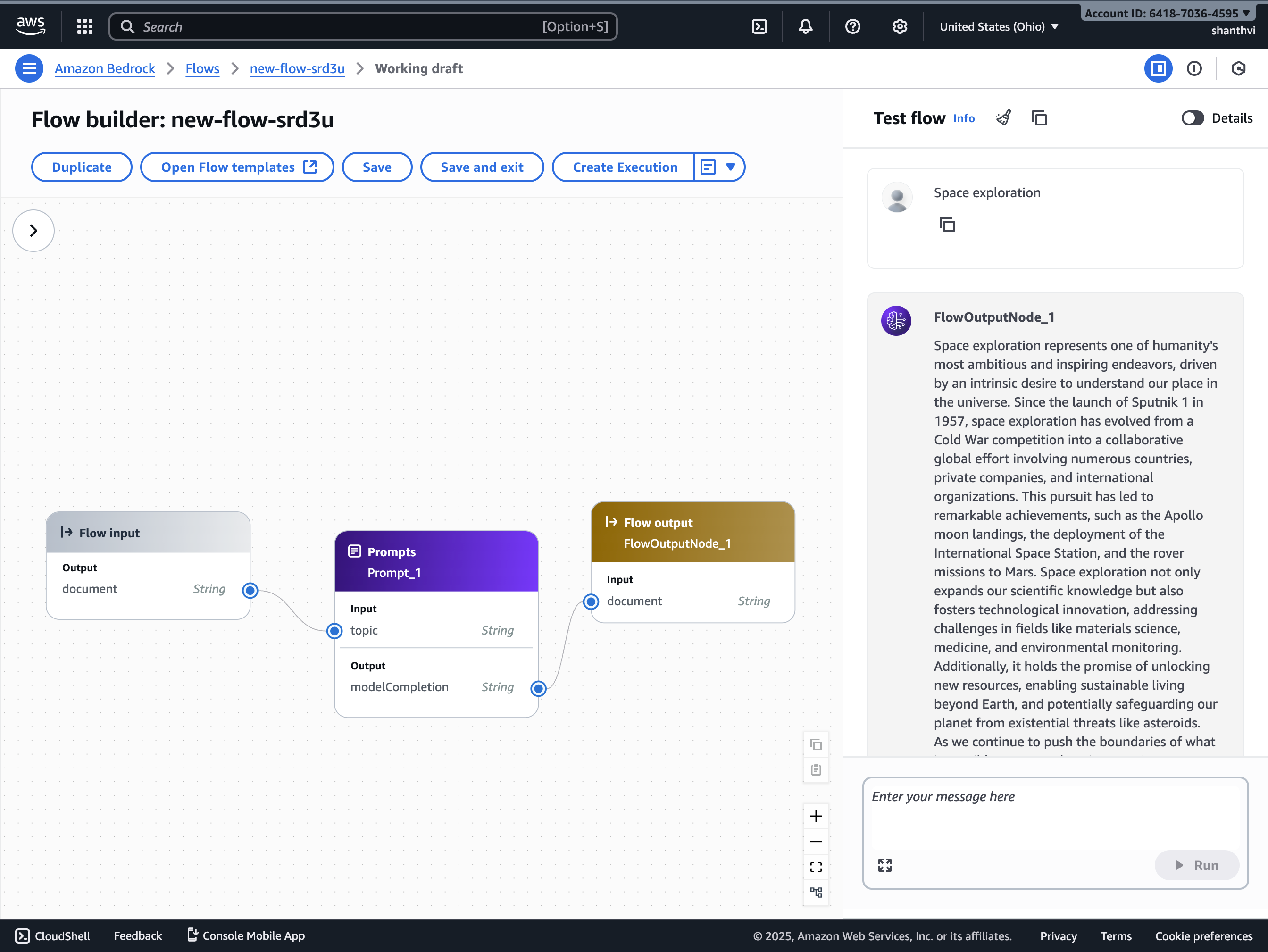
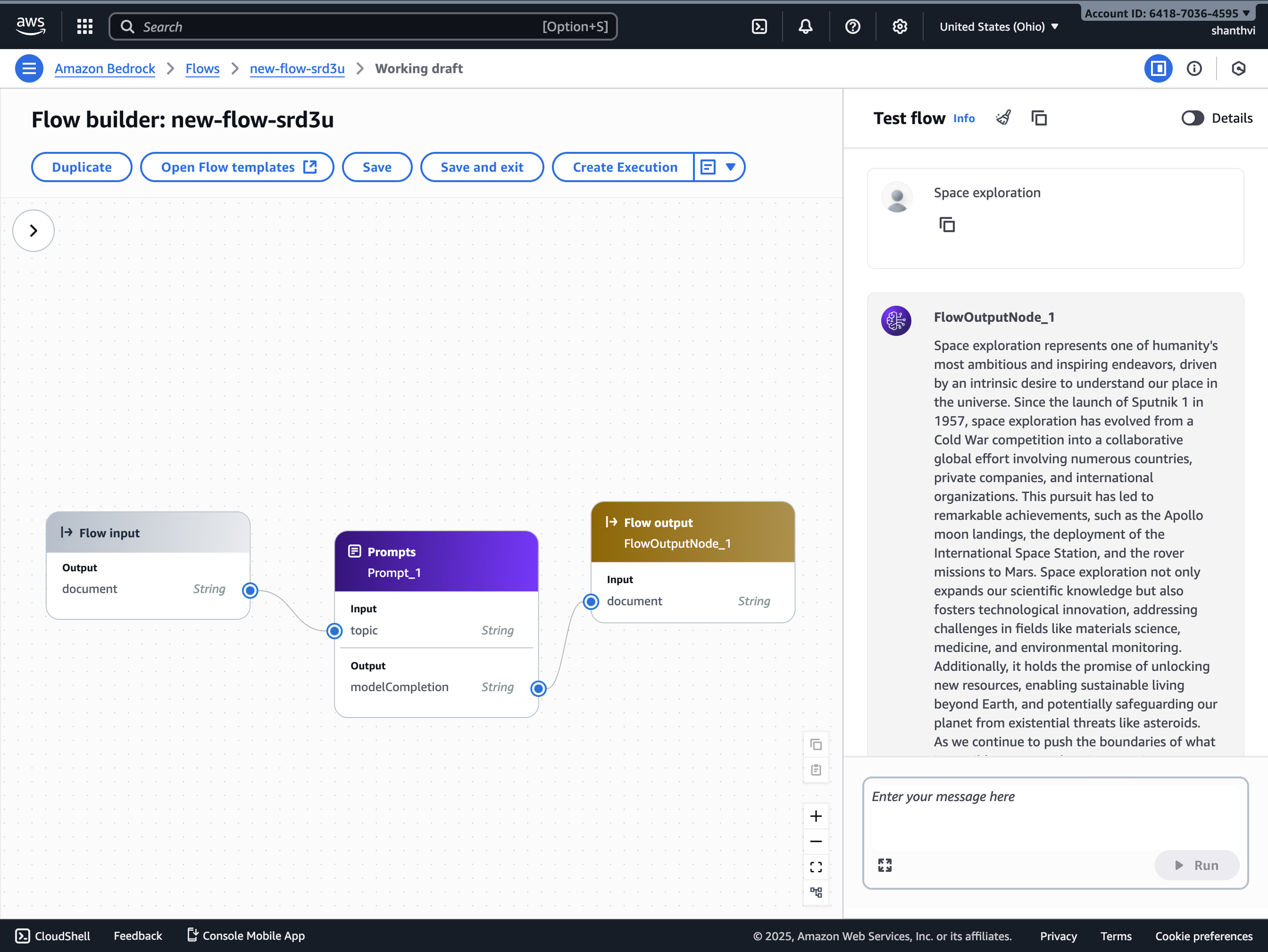
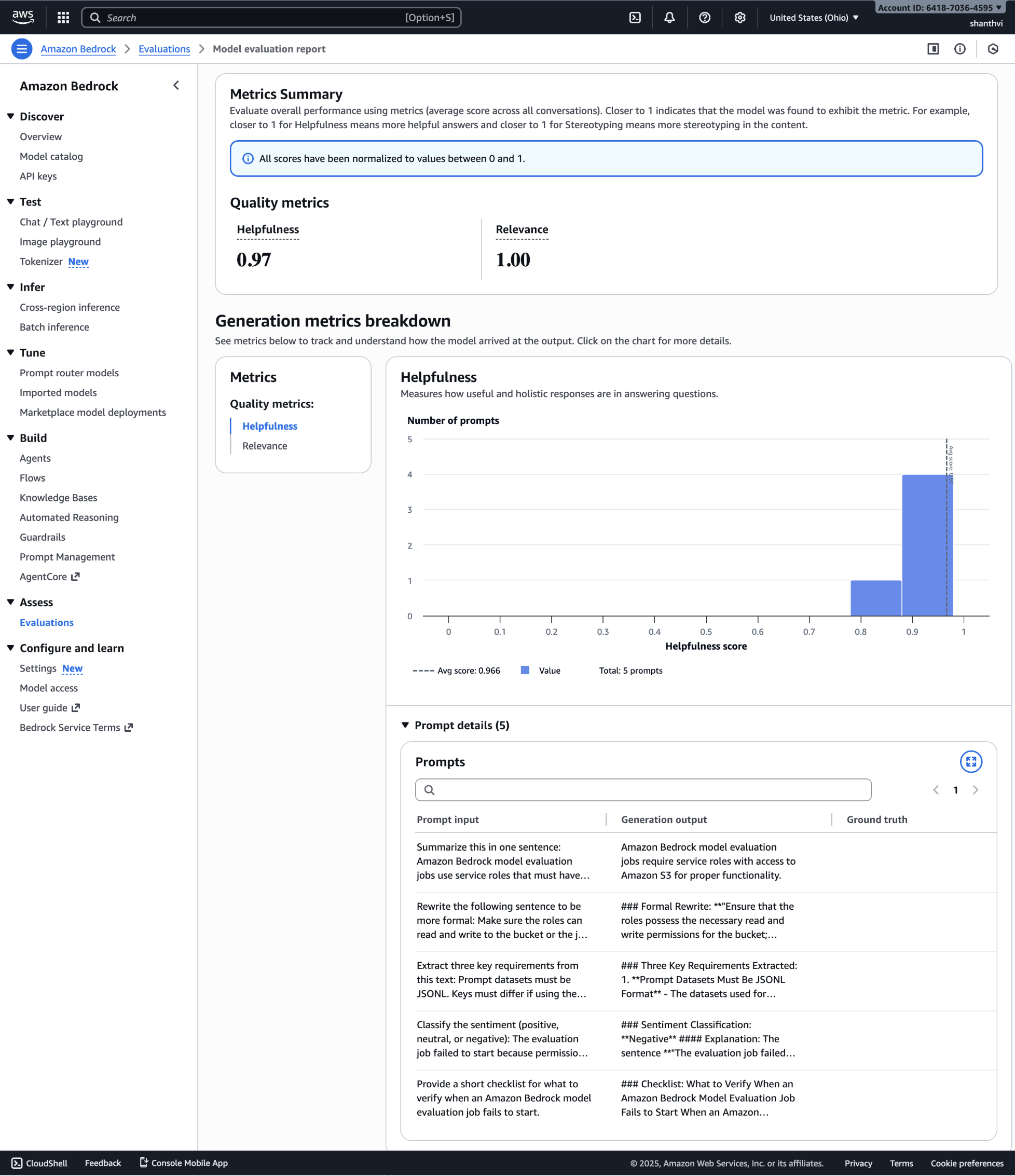
Amazon Bedrock is AWS's managed platform for building, evaluating, and operating generative AI applications using foundation models. I led UX for two core platform capabilities: Bedrock Flows (async executions and trace visibility) and Bedrock Model Evaluations (errors, input validation, and result clarity). Both shipped publicly.
Customers could design and test Flows synchronously, but real production use cases needed long-running executions, the ability to re-run trusted flows without re-authoring, and clear visibility into progress, failures, and intermediate steps. Model evaluations had a parallel problem: cryptic errors at start, malformed inputs that wasted compute, and evaluation results that were hard to interpret — especially for RAG pipelines.
"How do we scale GenAI workflows beyond synchronous limits — and improve trust and observability when they run?"
The work followed a discovery-first arc: PM alignment, conversations with feature partners and customers, then design through internal review to public launch.
Model evaluations require structured datasets — JSONL files — and are typically used for comparing models or evaluating RAG pipelines. The brief was to make the experience legible at every failure point.
Both features shipped as publicly available Bedrock capabilities. Async executions enabled production-scale GenAI workflows beyond synchronous limits. Execution tracing improved observability and trust in AI workflows. Better error handling and input validation reduced friction during evaluation setup, and the results UX made model evaluations more actionable and trustworthy.
This case study is described at a high level. Some details, metrics, and internal tooling are generalized or omitted under confidentiality. A deeper walkthrough with workflows, error states, and execution traces is available on request.
I'm happy to share workflows, error states, and the execution-trace UX in detail.
Get in touch →